
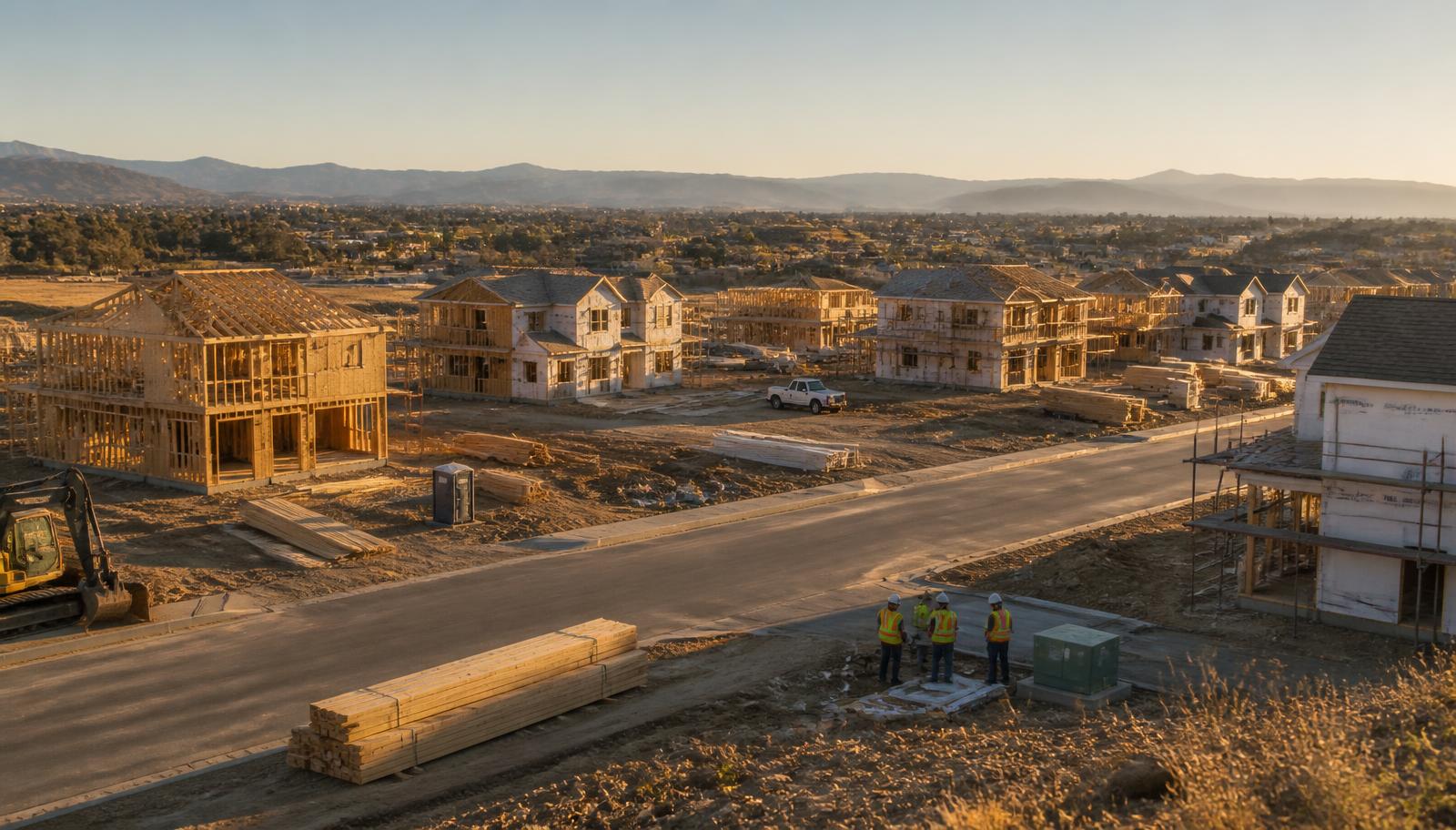
Residential new construction
Insurance for Trade Contractors Working on Residential New Construction
If you frame, wire, plumb, roof, pour, or finish homes for a national builder running subdivisions in your market, or for a regional or state builder doing the same work at smaller scale, you already know your insurance is not a formality. It is a condition of getting on the job and staying on it.
You may also have learned that it is one of the hardest placements in commercial insurance. Contractors in this position routinely find that the agent who handled their commercial and service work cannot get a market for the residential side at all. That is not a reflection on the contractor. It is the state of the class.
Audience
Who this page is for
Trade contractors performing work on tract homes, subdivisions, and residential new construction as a subcontractor. That includes work for the national production builders, and for the regional and state builders that operate the same way at lower volume, sometimes called residential general contractors.
If you are the builder rather than the subcontractor, there is a note for you near the bottom of this page.
The market
Why the general liability is hard to place
Residential new construction is a construction defect class, and construction defect is a long-tail exposure. A framing, stucco, or plumbing issue on a home built this year may not surface as a claim for five, eight, or ten years depending on the state. Carriers writing it are underwriting a liability they will not see the shape of for a decade.
The result is a market that behaves differently from the rest of commercial insurance.
- Most standard carriers restrict or exclude residential new construction outright, often through wording specific enough that a contractor can read their own policy and not realize the work is excluded.
- The placement frequently moves to the excess and surplus lines market, where forms are negotiated rather than filed, and two policies showing the same limits can behave very differently.
- Surplus lines residential policies commonly carry a self-insured retention rather than a deductible, which means the contractor funds defense costs from the first dollar until the retention is satisfied. That is a cash flow issue, not only a coverage issue.
- Underwriting asks real questions. How many units per year, which states, what percentage of the work is residential versus commercial, how much is subcontracted out, and what your subcontract agreement and certificate collection actually look like.
- Some states are materially harder than others, driven by their construction defect case law and statute of repose length rather than by anything about your operation.
None of that makes the coverage unavailable. It makes it a placement rather than a purchase, and it rewards knowing the market.
Builder schedules
What builders require, and what each requirement actually means
The national builders publish standardized insurance requirement schedules, and their risk departments enforce them literally. A certificate that is close is a certificate that gets rejected. Here is what the schedule is usually asking for.
Additional insured, ongoing and completed operations
The builder wants to be an insured under your policy for the work you perform, both while it is happening and after it is finished. The completed operations half is the one that gets missed. A blanket additional insured endorsement covering ongoing operations only will pass a quick glance and fail a real review.
Primary and non-contributory
Your policy pays first, and it does not ask the builder's policy to contribute. Without this wording, your carrier can take the position that the builder's coverage shares the loss, which is precisely the argument the builder wrote the requirement to prevent.
Waiver of subrogation
Your carrier gives up its right to come back against the builder after paying a claim. Most carriers will add it and some charge for it. It has to be on the policy, not simply typed onto the certificate.
Per-project aggregate
Without it, your general aggregate is a single pool spread across every job you touch in the policy year. One bad subdivision can consume the limit that was supposed to protect thirty other homes. Builders require it because they have watched it happen.
Minimum limits and a following-form umbrella
The primary limit is usually the easy part. The umbrella has to sit over the right underlying policies and follow their terms, and an umbrella that drops coverage your primary provides is a gap the builder will find.
Notice of cancellation
The builder wants advance notice if your coverage goes away. Carrier willingness to provide it varies, and the certificate language has to match what the policy actually allows.
Workers compensation and employers liability
Statutory workers compensation plus employers liability at the stated limits, with a waiver of subrogation in favor of the builder in most schedules.
Commercial auto
Usually a combined single limit covering owned, hired, and non-owned vehicles, with the builder added as an additional insured.
First-pass failures
Why policies get rejected by builder risk departments
- Endorsement forms that limit rather than grant. Not all additional insured endorsements are equal. Some extend coverage only to the extent required by written contract and only for the named party's vicarious liability, which is far narrower than the schedule contemplates.
- Blanket additional insured wording that does not reach completed operations.
- Certificates describing coverage the policy does not contain. A certificate is evidence, not a contract. If the underlying policy does not carry the endorsement, the certificate does not create it.
- Residential exclusions the reviewer spots immediately. If your general liability excludes tract homes and you are working on tract homes, the certificate is not the problem.
- Coverage that expires mid-project with no renewal on file.
Read the endorsements
Residential exclusions carriers use
Read your general liability policy for these. They are common, they are easy to miss, and any one of them can make your coverage irrelevant to the work you are actually performing.
- Tract home or track home exclusions, sometimes defined by the number of similar units in a development
- Subdivision exclusions
- Condominium and townhome exclusions, which often extend to any attached or multi-unit residential structure
- Unit count caps limiting coverage to a maximum number of residential units per year
- New construction versus service, repair, and remodel distinctions, where the policy covers one and not the other
- EIFS and synthetic stucco exclusions
- Roofing exclusions, or roofing limited by pitch or height
- Subsidence and earth movement exclusions, which matter enormously in some states and very little in others
- Prior work or retroactive date limitations that cut off completed operations for work performed before the policy began
Wrap programs
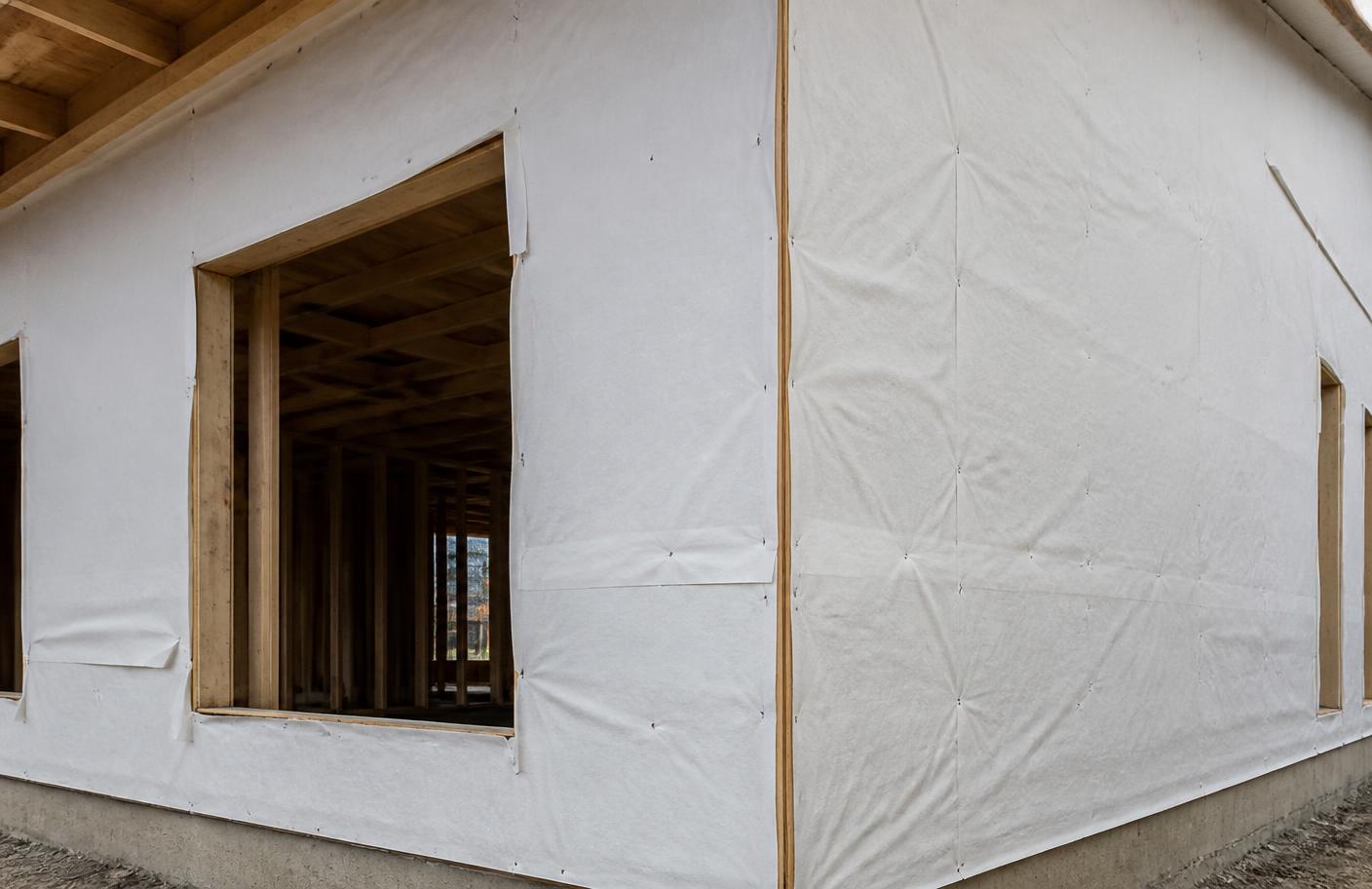
Wrap-ups: OCIP and CCIP
Larger builders sometimes place a wrap-up, an owner controlled or contractor controlled insurance program covering enrolled subcontractors on a specific project under one policy. Being enrolled in a wrap does not mean you can go without your own coverage.
- The wrap covers enrolled operations at the enrolled site. Your off-site work, your shop, your yard, and your fabrication are not in it.
- Pre-mobilization and post-completion activity often falls outside the enrolled period.
- Commercial auto, workers compensation under many wraps, tools and equipment, and your own property remain yours to carry.
- Wraps carry deductible or self-insured retention reimbursement obligations that flow back to the subcontractor responsible for the loss. Read that section of the enrollment agreement before you sign it.
- Your own general liability still has to exist, and it still has to respond to everything the wrap does not.
Long tail
Completed operations and the tail
The policy that responds to a construction defect claim is generally the one in force when the work was performed, not the one in force when the claim arrives. That single fact drives several things worth understanding.
Statute of repose varies widely by state, and it is the outer limit on how long you can be sued over the work regardless of when the defect was discovered. Some states cut off at six years. Others run past ten.
Progressive and continuous damage claims can trigger multiple policy years, which is where the coverage question gets complicated and where a consistent, well documented insurance history earns its keep.
If you let coverage lapse, change carriers without attention to prior work, or accept a retroactive date that starts today, you can create a gap for work you already completed and cannot go back and fix.
Placement
How we approach it
Insurance Office of America is an independent agency of roughly 1,500 employees, which means we are not limited to a single carrier’s appetite. For residential new construction specifically, we work with specialty brokers and wholesalers who handle this class every day and who track which markets are open in which states at any given moment. That access is most of the battle.
The rest is the submission. Residential contractor submissions get declined for being incomplete more often than for being bad risks. We build the file the way underwriters in this class want to see it: a clean operations description, unit counts by state, the residential and commercial split, subcontractor usage and the controls around it, your subcontract agreement, and loss history with context rather than a bare loss run.
Then we look at whether what comes back actually does what your builder contracts require. That is the step that gets skipped, and it is the step that determines whether your certificate clears the risk department on the first pass.
Questions
Frequently asked questions
- My general liability policy does not say anything about residential work. Am I covered?
- Possibly, and it is worth confirming rather than assuming. Residential restrictions frequently appear on endorsements rather than in the main policy form, and the wording is not always obvious. Send the full policy, including every endorsement, and we will tell you what it actually says.
- The builder rejected my certificate. What now?
- In most cases the certificate is accurate and the policy is the problem, which means the fix is an endorsement or a different policy rather than a reissued certificate. Send us the builder's insurance requirement schedule alongside your policy and we can identify the specific gap quickly.
- What is a self-insured retention, and why does my quote have one?
- A self-insured retention is an amount you fund before the carrier's obligation begins, and unlike a deductible it typically applies to defense costs as well as damages. Surplus lines residential policies commonly carry one. It is manageable when you plan for it, and it is a real consideration when comparing two quotes that look similar on limits.
- I am enrolled in the builder's wrap-up. Do I still need my own general liability?
- Yes. A wrap covers enrolled operations at the enrolled site. Your off-site work, your other jobs, your shop and yard, and often your pre-mobilization and post-completion activity are not covered by it, and most of your other lines are unaffected by the wrap entirely.
- How long does a placement like this take?
- Longer than commercial work. Plan on starting 60 to 90 days before renewal. The submission takes real work to assemble, and the specialty markets do not turn quotes around in a day.
Let’s look at what you have
Send us your current policy, including endorsements, along with a copy of a builder insurance requirement schedule you are working under. We will tell you where the two do not line up. No cost, and no obligation to move anything.
The information on this page is general in nature and is not a statement of coverage or a contract. All coverage is subject to policy terms, conditions, exclusions, and carrier underwriting. Availability varies by state, class of business, and individual risk.