Coverage and claims
12 minutes readSpecialty Contractor Insurance
Why General Liability Can Fail on a Restoration Job: Mold, Category 3 Water and the GL/CPL Gap
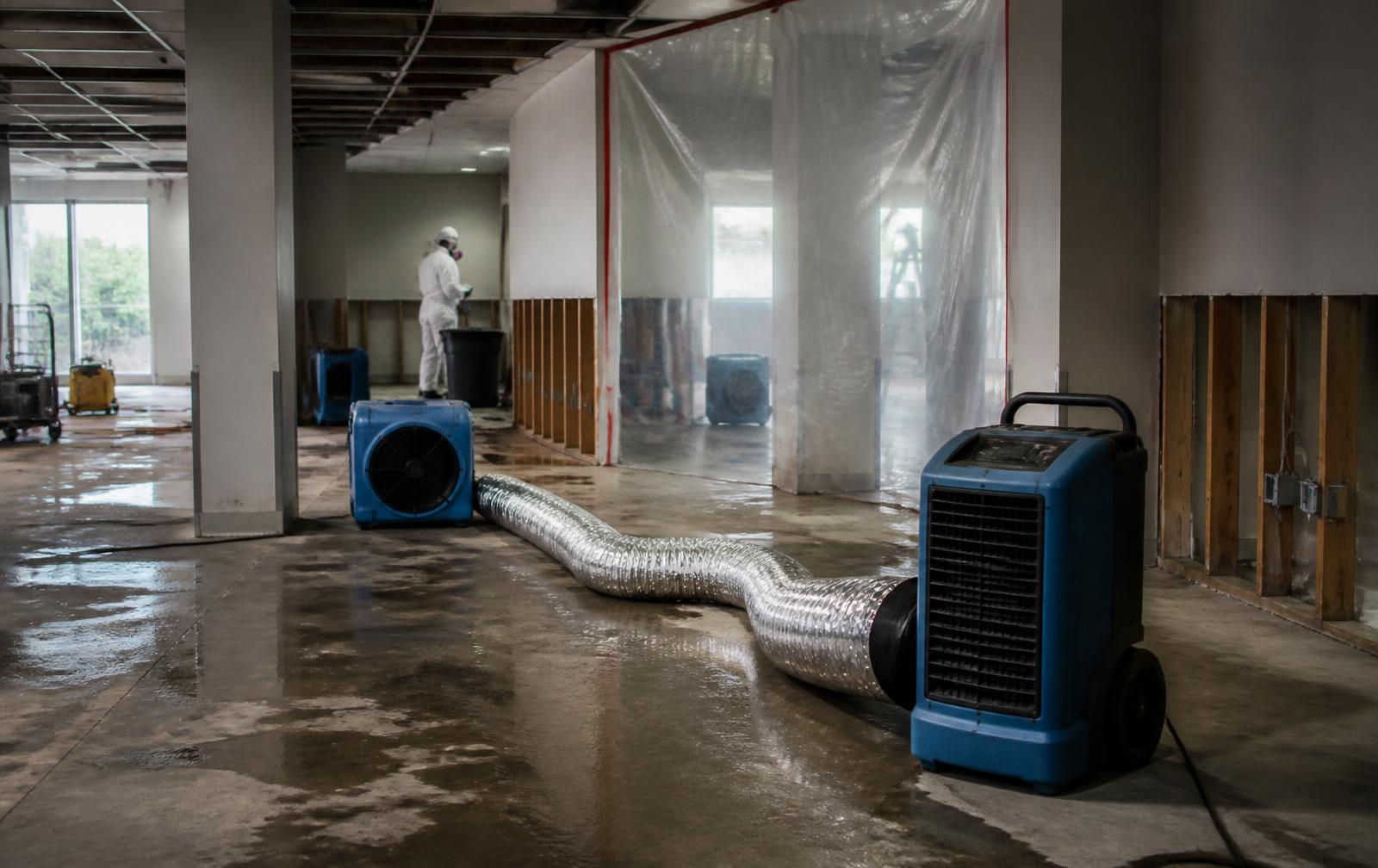
A restoration contractor gets called to a commercial building after a major sewage backup.
Crews extract the water, remove contaminated materials, set drying equipment, establish containment, and begin remediation. The contractor has a $1 million general liability policy and a separate $1 million contractors pollution liability policy. Both are current. Both appear on the certificate of insurance.
On paper, the insurance program looks fine.
Then a claim occurs.
The general liability carrier points to a fungi and bacteria exclusion. The pollution carrier reviews the allegations and determines that part of the claimed damage does not arise from a covered pollution condition.
Two liability policies are sitting in the insurance program, yet there may still be a gap between them.
That is one of the more important insurance issues restoration contractors need to understand.
Restoration work creates an unusual liability problem
Most contractors want to avoid mold, sewage, bacteria, smoke residue, contaminated materials, and other environmental conditions.
Restoration contractors are hired because those conditions are already there.
A normal water or fire restoration project can involve structural drying, demolition, antimicrobial treatment, containment, contents handling, cleaning, debris removal, and reconstruction. Mold remediation introduces another layer of specialized procedures and documentation.
That distinction matters to an insurance carrier.
The contractor isn’t simply working near a potentially contaminated condition. Assessing or removing that condition may be part of the scope of work.
This is why a standard contractor general liability policy deserves a much closer review when it is being used to insure a restoration company. See Restoration Contractor Insurance.
Start with what general liability is supposed to cover
Commercial general liability is still the foundation of a restoration contractor’s liability program.
It can respond to claims alleging third-party bodily injury or property damage arising from the contractor’s operations, subject to the policy’s terms, conditions, and exclusions.
Think about ordinary jobsite incidents.
A technician damages an expensive finished surface while moving equipment.
A customer trips over a hose or power cord.
A worker accidentally damages an unaffected section of the building.
A subcontractor’s work later contributes to property damage after the project is complete.
Those are the kinds of exposures most contractors associate with general liability.
The difficulty begins when mold, bacteria, sewage, pollutants, or other contaminants enter the claim.
The policy’s exclusions and endorsements can change the answer substantially.
The fungi and bacteria endorsement deserves more attention than it usually gets
When I review insurance for a restoration contractor, one of the documents I want to see is the actual fungi and bacteria endorsement attached to the general liability policy.
Not the certificate.
Not the proposal summary.
The endorsement.
Some forms are much broader than a business owner would expect from simply hearing that the policy has a “mold exclusion.”
The obvious assumption is that the policy will not cover damage caused by mold.
The bigger question is this:
“What happens to the rest of the general liability coverage when your company is working at a jobsite because mold or bacteria are present?”
Certain fungi and bacteria endorsements have historically been written broadly enough to create serious problems at remediation jobsites. Industry insurance guidance has specifically identified this issue for fire and water restoration contractors.
Consider a simplified example.
Your company is performing mold remediation in a commercial building. During the project, a technician accidentally causes a fire unrelated to the mold itself.
At first glance, that sounds like a general liability claim.
But if the GL endorsement applies broadly to bodily injury or property damage arising from work involving fungi or bacteria, the analysis becomes more complicated.
The fire did not have to be caused by mold for the endorsement wording to matter.
That is a very different problem from simply saying, “My GL doesn’t cover mold.”
Pull the actual endorsement
If you own a restoration company and haven’t read the fungi and bacteria endorsement on your current GL policy, start there.
Look beyond the title.
The operative wording determines whether the exclusion is limited to damage caused by fungi or bacteria or reaches more broadly into operations involving those conditions.
That distinction can be worth far more than a small difference in premium between two policies.
Category 3 water puts the problem front and center
Water mitigation makes the GL and pollution issue easier to see.
A clean-water loss from a supply line presents one type of exposure. A sewage backup or other heavily contaminated water loss presents another.
Once bacteria, sewage, microbial contamination, or similar conditions become part of the project, environmental exclusions become much more relevant.
The contractor may be:
- removing contaminated building materials
- extracting water containing biological contaminants
- disinfecting affected areas
- transporting contaminated debris
- working around occupants or employees
- deciding what can be cleaned versus what needs to be removed
This isn’t an incidental exposure. It may be the entire reason the contractor was hired.
The natural response from many business owners is:
“That’s why I bought contractors pollution liability.”
Correct. CPL is an important part of the solution.
But it does not mean you can stop reading.
Contractors pollution liability is not simply general liability with the pollution exclusion removed
Contractors pollution liability is designed to address environmental exposures that traditional liability policies often restrict or exclude.
For a restoration contractor, that can include claims involving mold, bacteria, sewage, contaminated water, cleanup costs, and other pollution conditions, depending on the policy.
The phrase “depending on the policy” matters.
Environmental coverage is less standardized than many familiar commercial insurance products. Policy definitions, exclusions, coverage triggers, and extensions can vary substantially between carriers and forms.
A restoration contractor’s CPL review should address questions such as:
Does the policy affirmatively address mold and microbial matter?
How is bacteria treated?
Does it contemplate indoor restoration work?
Are transportation and disposal exposures included?
Does coverage extend to completed operations?
How are emergency response and catastrophe operations handled?
What happens when subcontractors perform part of the remediation work?
Are professional services included, excluded, or separately insured?
Those aren’t academic questions.
They determine whether the pollution policy actually resembles the work your crews perform every week.
Where the GL/CPL gap can appear
Here is the problem in its simplest form.
Suppose a restoration contractor is working at a mold remediation site.
Claim A: A pollution-related allegation
An occupant alleges that improper containment caused microbial contamination to spread into an unaffected portion of the building.
That looks like the type of environmental allegation a properly structured contractors pollution policy may be designed to address, subject to the actual policy wording.
Claim B: Ordinary accidental property damage
While performing the same remediation project, a technician damages an expensive stone floor while moving a piece of equipment.
That looks more like a traditional general liability claim.
Now assume the GL policy contains a fungi and bacteria endorsement broad enough to affect coverage at the remediation jobsite.
The stone floor damage wasn’t caused by mold.
At the same time, the CPL carrier may ask an entirely different question: did the property damage arise from a covered pollution condition?
If it didn’t, the pollution policy may not simply step in and replace the missing GL coverage.
That’s the seam.
Two policies do not automatically equal complete coverage
A contractor can carry both GL and CPL and still have a problem if the policies were never designed to work together.
This is one reason combined GL/CPL programs written specifically for restoration contractors can be worth evaluating. The objective is not merely to buy another environmental policy. It is to reduce conflicts between the policies covering the same operation.
A separate GL and separate CPL structure can also work, but the forms need to be compared carefully.
Buying each policy in isolation is where trouble starts.
Professional liability creates another potential seam
Restoration contractors don’t only perform physical labor.
They make decisions.
A technician takes moisture readings and determines where drying equipment should be placed.
A project manager decides whether building materials can be salvaged.
Someone develops a drying plan.
A remediation scope identifies what should be removed.
The contractor advises when an area is ready for reconstruction.
Those decisions contain an element of professional judgment.
If a customer later alleges that the contractor’s recommendation was wrong and caused additional loss, the claim may not fit neatly into ordinary general liability or contractors pollution liability.
Professional-services exclusions commonly appear in liability policies.
That is why professional liability or contractors errors and omissions deserves consideration for restoration companies performing assessment, consulting, protocol development, technical recommendations, or other services where the allegation may be based on an error rather than direct physical workmanship.
The more technical the contractor’s role becomes, the more important this review becomes.
Reconstruction changes the insurance conversation again
Many restoration contractors don’t leave when the building is dry.
They rebuild it.
Drywall gets replaced. Flooring goes back down. Cabinets are installed. Plumbing or electrical work may be subcontracted. In some cases, the restoration company manages substantial portions of the reconstruction project.
At that point, the company is dealing with the same insurance issues faced by other general and specialty contractors.
Completed operations matter.
Subcontractor requirements matter.
Residential limitations can matter.
Additional insured and indemnification requirements become more important.
Workers compensation classifications may change with the work being performed.
The carrier needs to understand that reconstruction is part of the operation.
A company primarily presented to an underwriter as a water mitigation firm should not discover after a serious claim that a large percentage of its revenue actually came from reconstruction work the carrier never contemplated.
Seven things I would review on a restoration contractor’s insurance program
You do not need to become an insurance coverage attorney to identify the obvious trouble spots.
Start with these seven items.
1. Pull the fungi and bacteria endorsement from the GL
Read the operative exclusion wording.
Determine whether it only restricts specific mold-related damage or potentially affects broader claims connected with remediation work.
2. Compare the GL exclusions directly against the CPL policy
Do not review the policies separately.
If the GL excludes an exposure, identify exactly where the pollution policy grants it back, if it does.
There should be a deliberate bridge between the two.
3. Review the CPL definitions
Look specifically at mold, fungi, bacteria, microbial matter, pollutants, and pollution conditions.
A policy written primarily for traditional outdoor environmental contracting may not be the best fit for indoor restoration operations.
4. Check completed operations, transportation, and disposal
The exposure doesn’t necessarily end when your crew drives away.
Claims can arise after remediation is complete, while contaminated material is being transported, or through disposal operations.
Find out which policy is intended to respond.
5. Read the professional-services exclusion
If your company develops scopes, makes technical recommendations, performs assessments, interprets readings, or provides remediation protocols, determine how professional liability is being addressed.
Don’t assume GL or CPL automatically covers an allegation involving a bad professional decision.
6. Disclose reconstruction operations
If your company rebuilds after mitigation, the insurance program should reflect that operation.
Review subcontracted work, completed operations, residential exposure, contract requirements, and the trades being performed.
7. Review the entire program as one insurance structure
GL, pollution, professional liability, auto, workers compensation, umbrella, and property coverages shouldn’t be treated as unrelated purchases.
Restoration operations cross policy lines constantly.
The program needs to make sense as a whole.
The certificate doesn’t answer these questions
A certificate of insurance might show:
General Liability: $1,000,000.
Pollution Liability: $1,000,000.
Professional Liability: $1,000,000.
That tells you the policies exist.
It tells you very little about how they will interact after a loss.
The real answers are in the forms, exclusions, endorsements, definitions, and coverage grants attached to those policies.
This is particularly important for restoration companies because the work routinely sits at the intersection of traditional contracting, environmental remediation, and professional judgment.
A certificate cannot show you that seam.
Review the GL and pollution policies side by side
The better question isn’t:
“Do we carry pollution liability?”
Ask this instead:
“If the GL excludes something because mold, bacteria, or contamination is involved, where exactly does the CPL begin?”
Then ask what happens to an otherwise ordinary liability claim at that same jobsite.
That review often tells you much more about the quality of the insurance program than comparing premiums.
Have us review the GL/CPL interface
If you operate a water, fire, mold, or disaster restoration company, send us your current general liability policy, including the fungi, bacteria, and pollution endorsements, along with your contractors pollution policy.
We’ll review how the forms interact and identify areas worth discussing before an actual claim tests them.
Working with specialty trade contractors in all 50 states, at our best with firms between $500,000 and $20 million in annual revenue.
The information in this article is general in nature and is not a statement of coverage or legal advice. Actual coverage depends on the specific policy language, endorsements, facts of a loss, applicable law, and carrier interpretation. Coverage availability varies by state, class of business, and individual risk.