
Insurance for Restoration Contractors
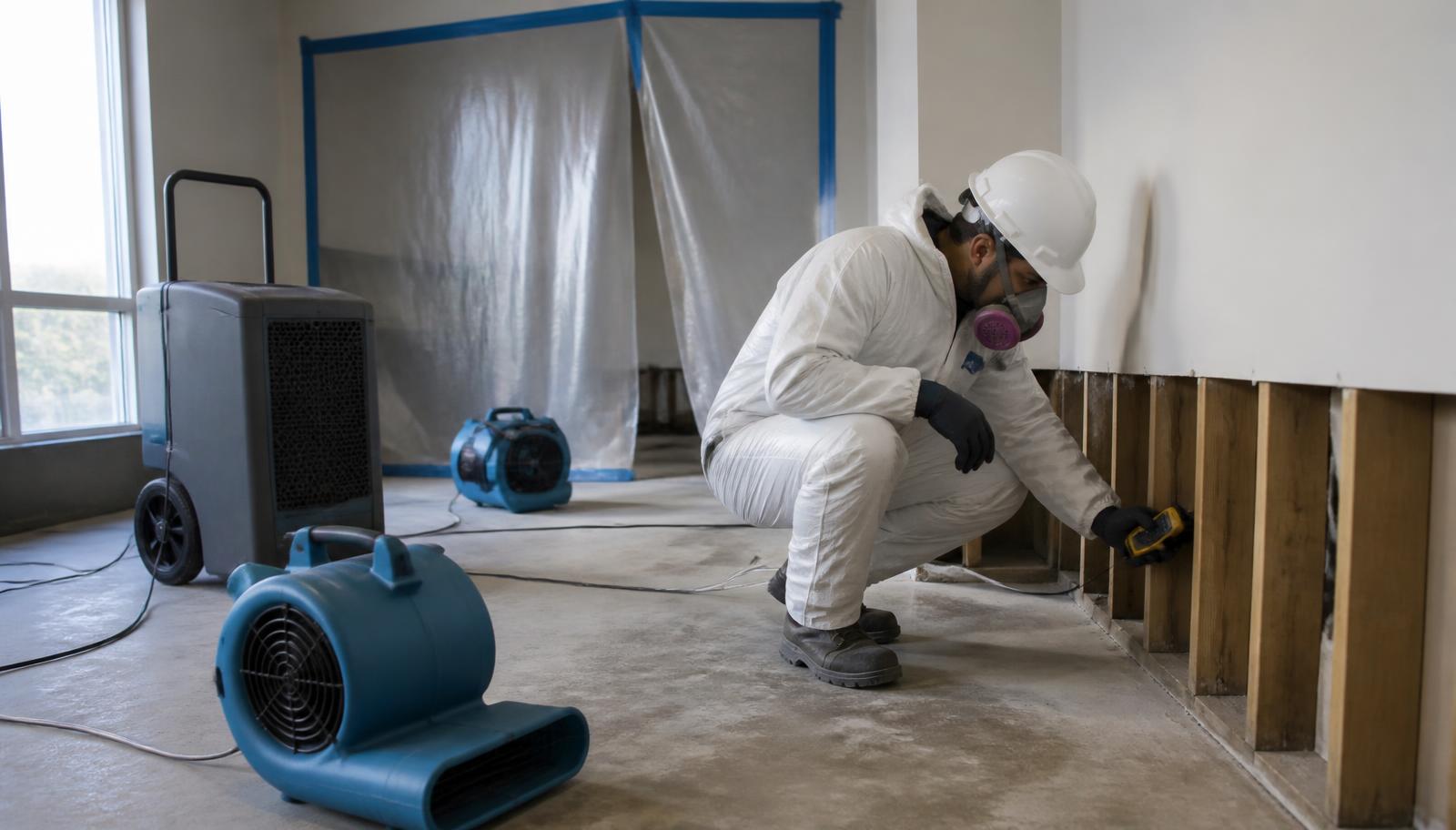
Restoration contractors walk into buildings after something has already gone wrong. Water is moving through walls, smoke is in the HVAC system, sewage has entered occupied space, or mold has developed behind finished surfaces. That makes the insurance problem different from almost every other construction trade.
A single restoration job can involve emergency response, demolition, structural drying, microbial contamination, contents handling, temporary storage, specialty equipment, subcontracted trades, and reconstruction. Each part of that job can fall under a different policy.
The biggest issue is usually not whether the contractor carries insurance. Most do. It is whether the general liability, pollution, professional, property, auto, and workers compensation policies actually line up with the work being performed.
Coverage gaps
Where coverage goes wrong for restoration contractors
Mold, fungi, and bacteria exclusions. Many general liability policies contain fungi or bacteria exclusions that are much broader than the contractor expects. Depending on the wording, the problem can extend beyond a claim specifically alleging mold damage and affect operations taking place at a contaminated jobsite. A separate contractors pollution policy does not automatically repair a poorly structured general liability form.
Category 3 water and sewage losses. A water extraction job can become an environmental claim quickly when sewage, bacteria, or other contaminants are involved. Standard general liability pollution exclusions may remove part or all of the exposure. Contractors pollution liability needs to be reviewed specifically for indoor microbial contamination rather than assumed to cover it.
Customer contents in your care. Pack-outs create a different property exposure. Furniture, electronics, inventory, artwork, and other customer property may be removed, transported, cleaned, and stored for weeks or months. General liability is not designed to function as property insurance for everything in your possession. Property of others, bailee, transit, and storage coverage need to reflect what the operation actually handles.
Drying and remediation decisions. Moisture readings, drying plans, demolition decisions, remediation protocols, and decisions about whether materials can be salvaged involve judgment. When the allegation is that the contractor made the wrong technical decision rather than physically damaged the property, general liability may not be the policy responding.
CAT work and emergency deployment. A hurricane, freeze event, or major storm can double a restoration contractor's workload almost overnight. Temporary labor, rented vehicles, unfamiliar subcontractors, long hours, and crews working in damaged structures all increase exposure at the exact moment operational controls are hardest to maintain.
Reconstruction after mitigation. Many restoration firms do not stop when the building is dry. They replace drywall, flooring, cabinetry, roofing, electrical components, and other damaged construction. Once reconstruction begins, residential exclusions, subcontractor restrictions, completed operations, classification, and contractual risk transfer become part of the insurance discussion.
Program
Coverages that matter most
- General liability written for restoration operations, with the fungi, bacteria, mold, pollution, residential, and subcontracted-work exclusions reviewed closely
- Contractors pollution liability or environmental liability designed for indoor restoration work, including the microbial and contaminated-water exposures the company actually handles
- Professional liability or contractors errors and omissions where the company performs assessments, develops drying or remediation plans, writes protocols, or makes technical recommendations
- Workers compensation, with mitigation, demolition, cleaning, remediation, and reconstruction payroll classified according to the work actually performed
- Commercial auto, including hired and non-owned auto for emergency response, supervisors, temporary vehicles, and catastrophe deployment
- Contractors equipment and inland marine coverage for extractors, air movers, dehumidifiers, air scrubbers, moisture meters, generators, trailers, and other equipment that moves from job to job
- Property of others or bailee coverage where customer contents are packed out, transported, cleaned, or stored
- Umbrella and excess liability, with careful attention to which underlying policies are actually scheduled beneath it
Underwriting
Classification and payroll
Restoration companies are difficult to classify because the name of the business tells an underwriter very little about what the employees actually do.
The right classification follows the work being performed, not the word “restoration” on the side of the truck.
A water mitigation technician, mold remediation crew, demolition employee, contents-cleaning technician, carpenter, and project manager may all work for the same company. Treating all of that payroll as one operation can create problems at audit and can distort the premium from the beginning.
Reconstruction is the dividing line worth watching. A company that extracts water and dries structures presents one risk profile. A company that also performs framing, drywall, roofing, electrical, plumbing, or full interior reconstruction presents another.
Catastrophe work adds another complication. Temporary employees and uninsured subcontractors hired during a surge can become expensive at workers compensation and general liability audit if payroll, certificates, and subcontract agreements are not being tracked while the work is happening.
Contract requirements
Restoration contractors can receive insurance requirements from property managers, commercial building owners, general contractors, municipalities, third-party administrators, and other entities directing the work.
Typical commercial requirements include additional insured status for ongoing and completed operations, primary and non-contributory wording, waiver of subrogation, stated umbrella limits, and evidence of workers compensation and commercial auto coverage.
Environmental requirements deserve closer attention. A contract may specifically require contractors pollution liability covering mold, bacteria, microbial matter, contaminated water, cleanup costs, transportation, or completed operations. Having a pollution policy is not enough if the required exposure falls outside its definition of a covered pollution condition.
Companies performing reconstruction also need the same contractual risk transfer controls as a general contractor. Subcontract agreements, certificates, additional insured status, and completed-operations coverage all matter when other trades perform work under your contract.
Claim scenarios
How these claims actually happen
A restoration contractor responds to a sewage backup affecting several floors of a commercial building. The crew removes wet materials, disinfects affected areas, and completes structural drying. Several weeks later, occupants complain of odor and microbial growth, and the building owner alleges that contaminated material was not properly contained during the original work. The contractor carries general liability and a separate pollution policy. The general liability policy contains a broad fungi and bacteria exclusion, while the pollution carrier disputes whether the alleged condition fits its covered definition. The contractor has two policies and still has a coverage problem between them.
Following a major residential fire, a restoration company removes furniture, electronics, clothing, and artwork from the home for cleaning and storage. Several months later, water enters the contractor's storage facility and damages part of the customer's property. The restoration contractor expected its general liability policy to respond. The carrier points to the treatment of property in the contractor's care, custody, or control. The real question becomes whether the company's property-of-others or bailee coverage was written with enough limit to cover the contents it routinely stores.
A water mitigation job expands into a full reconstruction project. The restoration company subcontracts plumbing and drywall work while managing the remainder of the project. Six months after completion, a plumbing connection fails and causes another major water loss. Now the claim involves completed operations, subcontracted work, additional insured status, the plumbing subcontractor's insurance, and the restoration contractor's own general liability form. What began as a water extraction account became a general contracting exposure the moment reconstruction was added to the scope.
Questions
Frequently asked questions
- Does general liability cover mold and sewage work?
- Not necessarily. Many contractor general liability policies contain pollution, fungi, bacteria, or microbial-matter exclusions. The wording varies significantly, and some exclusions are broader than contractors expect. Restoration companies performing this work should know exactly what their general liability policy excludes and how the pollution policy is intended to interact with it.
- I already have contractors pollution liability. Isn't that enough?
- Not by itself. Contractors pollution liability is a major part of a restoration insurance program, but the policy needs to match the actual operation. Indoor mold, bacteria, sewage, contaminated water, biohazards, transportation, completed operations, and professional services may be treated differently from one form to another. The general liability policy also has to be reviewed alongside it.
- Do I need professional liability if I am not an environmental consultant?
- Possibly. The exposure follows the decisions your company makes. If your team performs assessments, determines drying methods, develops remediation procedures, interprets moisture readings, recommends demolition, or advises a customer that an area is ready for reconstruction, there is a professional judgment component to the work.
- What coverage protects customers' belongings when we perform a pack-out?
- That generally requires property coverage designed for property belonging to others rather than relying solely on general liability. The right structure depends on whether you transport, clean, store, or perform all three functions. Limits should be based on the maximum values you could have in your possession at one time, not an arbitrary number selected when the policy was first written.
- We also perform reconstruction. Does that change our insurance?
- Yes. Reconstruction adds traditional contracting exposures to the restoration operation. Residential work, subcontractor usage, completed operations, payroll classifications, contract requirements, and the specific trades being performed all become underwriting considerations. Your carrier should know that reconstruction is part of the operation before a claim or audit discovers it.
Let’s look at what you have
Send us your current policy, including every endorsement, and tell us what your contracts require. We will tell you where the two do not line up. It costs nothing, and it does not obligate you to move anything.
Working with specialty trade contractors in all 50 states, at our best with firms between $500,000 and $20 million in annual revenue.
The information on this page is general in nature and is not a statement of coverage or a contract. All coverage is subject to policy terms, conditions, exclusions, and carrier underwriting. Availability varies by state, class of business, and individual risk.