
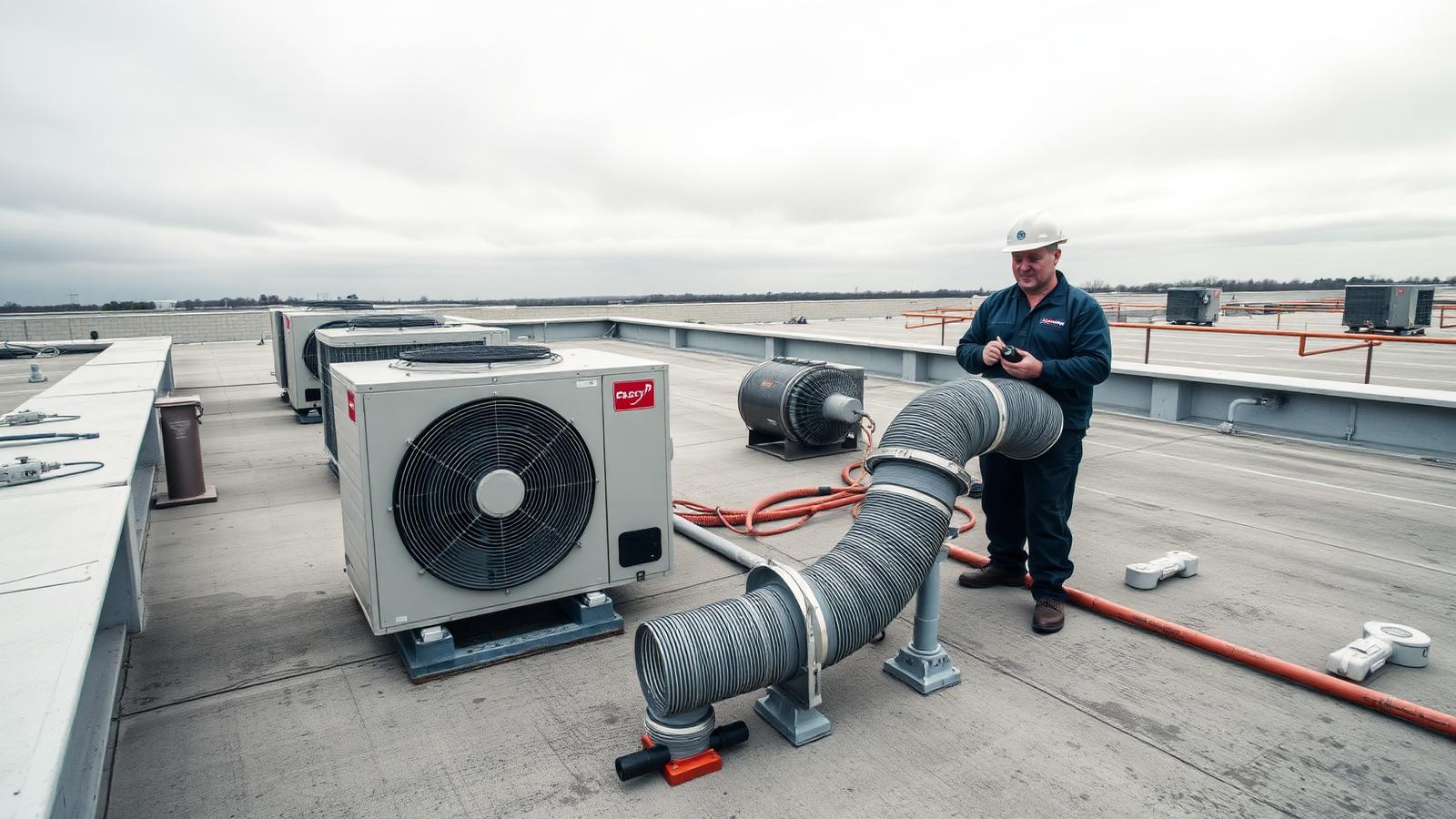
HVAC and Mechanical Contractor Insurance
HVAC contractors carry a wider set of exposures than almost any other trade, and the insurance program usually addresses only two or three of them. The work involves refrigerants, fuel, electrical connections, hot work, roof access, rigging, and in commercial refrigeration, responsibility for someone else's inventory. Each of those is a separate coverage conversation.
The other thing that makes this trade distinctive is the service agreement. Most HVAC contractors sign maintenance contracts committing them to response times, system performance, or preventive schedules. Those agreements create assumed liability, and assumed liability is covered only when it falls inside the policy's insured contract definition. A great many do not.
Coverage gaps
Where coverage goes wrong for HVAC contractors
Refrigerant release as a pollution claim. The pollution exclusion on a general liability policy is broad. A refrigerant discharge, a fuel oil spill, or a condensate contamination event can land outside coverage entirely, which is why contractors pollution liability belongs in this conversation more than in most trades.
Service and maintenance agreements. When you contractually promise a performance standard or accept liability for consequences, you may have assumed an obligation your general liability policy does not cover. Equipment failure claims following a missed maintenance visit are the common version.
Rooftop work, rigging, and crane operations. Setting a unit involves height, weight, and often a subcontracted crane. Who is responsible when a unit is dropped depends on contracts you may not have read closely, and on whether your policy covers the operation at all.
Carbon monoxide. A CO claim is a bodily injury claim with potential for multiple claimants and long-tail health arguments. Some carriers exclude it outright and others apply a sublimit the contractor is unaware of.
Commercial refrigeration and spoilage. If you service walk-ins, coolers, or cold storage, a failure that spoils product is a claim for the value of that inventory. That is often an uninsured business risk unless the program was built with it in mind.
Seasonal payroll swings. Summer and winter peaks bring in temporary labor, and the workers compensation audit catches every hour of it. Contractors who staff up seasonally without planning for the audit find out in a single lump sum.
Program
Coverages that matter most
- General liability, with attention to the pollution exclusion and to any carbon monoxide or refrigerant restrictions
- Contractors pollution liability, which for this trade is closer to core than optional
- Workers compensation, with seasonal payroll planned for rather than discovered
- Commercial auto, including hired and non-owned for a service fleet
- Umbrella, particularly where rooftop and rigging work is routine
- Tools, equipment, and installation floater, with gauges, recovery machines, and staged equipment scheduled at realistic values
- Professional liability where the shop performs load calculations, system design, or design-build work
Underwriting
Classification and payroll
HVAC classification depends heavily on whether the work is installation, service, or sheet metal fabrication, and shops doing all three frequently report under a single code. Sheet metal shop work in particular carries a different rate than field installation. If you run a fabrication shop, that payroll should be separated.
Uninsured subcontractors are added to your payroll at audit at your rate, which is the most expensive possible way to hire help.
The other recurring issue is subcontracted labor during peak season.
Contract requirements
Commercial and institutional work brings the full requirement schedule. On projects with a mechanical engineer of record, expect professional liability requirements if any portion of the design is delegated to you. Service agreements with property managers and national accounts often carry indemnity language broader than a standard general liability policy will cover, and those are worth reading before signing rather than after a claim.
Claim scenarios
How these claims actually happen
A rooftop unit replacement at a retail center goes wrong during the lift, and the unit lands on the roof deck and penetrates into the space below. The crane was subcontracted. The rigging was the contractor's. Three carriers argue over which policy responds while the tenant's business interruption claim accumulates.
A maintenance customer's chiller fails in August, spoiling product and closing the facility for four days. The service agreement promised quarterly preventive maintenance and a 24-hour response. The customer's claim is built on those assumed obligations rather than on negligence, and the general liability policy's insured contract definition does not reach it.
A furnace installation is completed with an improperly sealed flue. Four months later the homeowners are hospitalized with carbon monoxide poisoning. The claim is bodily injury with multiple claimants, and the contractor's policy carries a carbon monoxide sublimit the owner did not know was there.
Questions
Frequently asked questions
- Is refrigerant release covered under my general liability?
- Frequently not. The pollution exclusion is broad enough to capture refrigerant discharge in several forms. Contractors pollution liability is the coverage built for it, and for this trade it is worth pricing rather than assuming.
- I sign maintenance agreements with property managers. Does that affect my coverage?
- It can. Those agreements often contain indemnity and performance obligations that go beyond what your policy's insured contract definition covers. Send us one and we can show you where the gap sits.
- I use temporary help in the summer. What should I be doing?
- Track the hours and the class, collect certificates from anyone you treat as a subcontractor, and budget for the audit rather than being surprised by it. This is the most common premium shock in this trade.
- Does my policy cover the crane operator I hire?
- That depends on the rental or service contract and on your own policy wording. Worth confirming before the next lift rather than after one.
- I do load calculations and system design in house. Do I need professional liability?
- Probably. If your shop makes design decisions rather than installing to an engineer's drawing, that exposure exists, and general liability excludes it.
Let’s look at what you have
Send us your current policy, including every endorsement, and tell us what your contracts require. We will tell you where the two do not line up. It costs nothing, and it does not obligate you to move anything.
Working with specialty trade contractors in all 50 states, at our best with firms between $500,000 and $20 million in annual revenue.
The information on this page is general in nature and is not a statement of coverage or a contract. All coverage is subject to policy terms, conditions, exclusions, and carrier underwriting. Availability varies by state, class of business, and individual risk.