
Roofing Contractor Insurance
Roofing is the hardest of the trades to place, and it is not close. Carriers that write general contractors, electricians, and plumbers without hesitation will decline a roofer on the class alone. Understanding why is the first step toward a program that actually works.
Three things drive it. Falls produce the most severe workers compensation claims in construction. Open roof exposure means a weather event during the work becomes a water damage claim on the entire building below. And the trade carries a reputation problem created by storm-chasing operators, which means legitimate roofing contractors get underwritten against a class average they did nothing to create.
None of that makes coverage unavailable. It does mean the submission, the way loss history is presented, and the carrier selection matter more in this trade than in any other we work in.
Coverage gaps
Where coverage goes wrong for roofing contractors
Open roof and weather during the work. A tear-off that gets rained on becomes a claim for everything below the deck. Whether your policy responds, and how the work-product exclusion applies to the roof itself, depends on wording most contractors have never read.
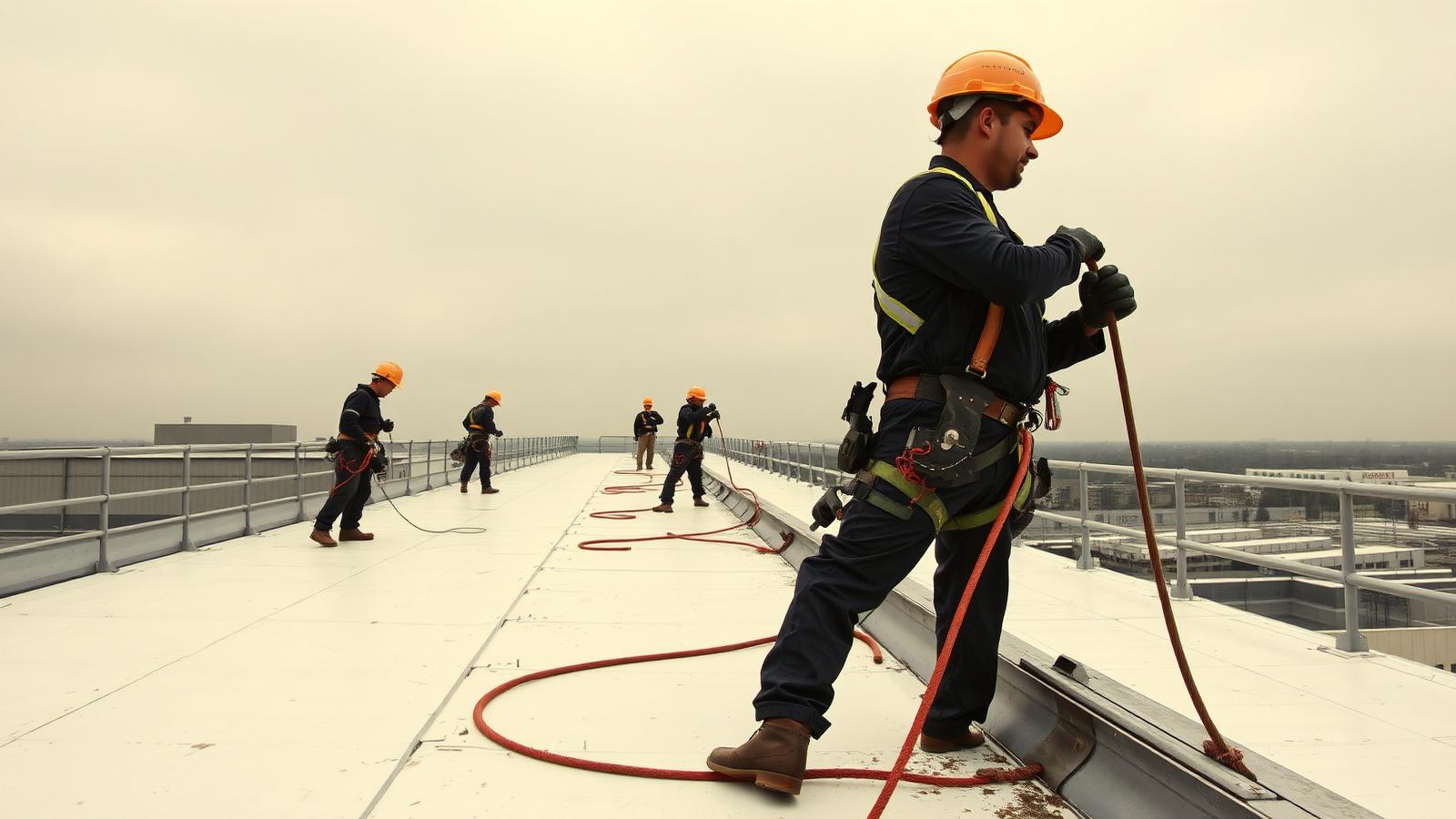
Fall severity on workers compensation. A single fall can produce a claim that follows your experience modification for years and changes your insurability, not just your rate. Documented fall protection programs affect both pricing and availability, and that is one of the few levers fully within your control.
Subcontracted crews and 1099 labor. This is the defining issue in roofing. Crews treated as subcontractors without certificates become your payroll at audit and your liability at claim. Carriers underwrite this question specifically, and the answer often determines whether you get a quote at all.
Torch-down and hot work. Fire originating from hot work on a roof is a total-loss exposure for the building beneath it. Many carriers exclude it, restrict it, or require documented permit and fire watch procedures.
Residential versus commercial appetite. Some markets write one and not the other, and the split is not always where a contractor would expect. Steep slope residential, low slope commercial, and insurance restoration work are three separate appetites.
Insurance restoration and TPA work. Contractors doing storm restoration through third party administrators, or working under assignment of benefits, face scrutiny that extends well beyond the roofing itself. Some carriers will not write it at any price.
Program
Coverages that matter most
- General liability, where the carrier selection matters more than the limit
- Workers compensation, where fall protection documentation and experience modification drive everything
- Umbrella, subject to availability, which is narrower in this trade than in others
- Commercial auto with meaningful driver selection and motor vehicle record controls
- Tools, equipment, and installation floater
- Builders risk or installation coverage on larger projects where the roof is the project
Underwriting
Classification and payroll
Roofing carries one of the highest workers compensation rates in construction, and the pressure to misclassify is correspondingly high.
Reporting roofing payroll under a lower-rated code is treated as fraud rather than as an error, and it is among the fastest ways to lose a market permanently.
The legitimate questions are about the split between roofing and any sheet metal, gutter, or carpentry work performed, and about how subcontracted labor is documented. Both are worth setting up correctly the first time rather than untangling later.
Contract requirements
Commercial roofing on institutional and public projects brings the full requirement schedule plus higher limits, and often a warranty obligation running longer than any policy will. Manufacturer certifications sometimes carry their own insurance requirements attached to the certification itself. On residential new construction for builders, expect the residential exclusion problem described on our residential new construction page.
Claim scenarios
How these claims actually happen
A tear-off on a two-story commercial building is left partially dried in overnight ahead of a forecast that changes. Three inches of rain enters the building and ruins the top floor. The claim covers the interior damage. It does not cover replacing the roofing work itself, and the difference between those two numbers is where the argument happens.
A crew member falls from a residential roof and sustains a spinal injury. The workers compensation claim reserves in the high six figures. The experience modification moves above 1.25 at the next calculation, several carriers decline the renewal, and the placement lands in a market costing sixty percent more.
A roofing contractor uses a labor crew paid on 1099 without collecting certificates of insurance. At audit, the entire crew's compensation is added to the contractor's payroll at the roofing rate. The audit bill exceeds the annual premium.
Questions
Frequently asked questions
- Why is my roofing insurance so expensive compared to other trades?
- Fall severity and open roof exposure, plus a class loss history shaped by operators who are not in the business the way you are. The lever you control is documentation. Fall protection programs, safety records, and clean subcontractor management genuinely move pricing.
- Can I get an umbrella as a roofer?
- Often yes, though availability is narrower and both the underlying limits and the primary carrier matter. Worth asking for early in the process rather than as an afterthought at binding.
- Does my policy cover water damage from an open roof?
- The damage to the building's interior, generally yes. The cost to redo your own roofing work, generally no. Confirm the specific wording, since roofing endorsements vary more than most.
- I use subcontracted crews. What do I need to have in place?
- Certificates of insurance from every crew, a written subcontract agreement, and records that survive an audit. This is the single largest driver of unplanned cost in this trade.
- Do I need to tell my carrier about torch-down work?
- Yes. Undisclosed hot work is a coverage problem waiting to happen, and many policies require a documented permit and fire watch program as a condition of covering it at all.
Let’s look at what you have
Send us your current policy, including every endorsement, and tell us what your contracts require. We will tell you where the two do not line up. It costs nothing, and it does not obligate you to move anything.
Working with specialty trade contractors in all 50 states, at our best with firms between $500,000 and $20 million in annual revenue.
The information on this page is general in nature and is not a statement of coverage or a contract. All coverage is subject to policy terms, conditions, exclusions, and carrier underwriting. Availability varies by state, class of business, and individual risk.